
Research on Fungal-Based Packaging Materials in the CircSyst Project


 Link Copied!
Article written by Dr. Kata Konstantin, MGFÜ
The development of sustainable packaging solutions is playing an increasingly important role in the transition to a circular economy. Within the CircSyst project, research is therefore also being carried out into innovative materials that may provide a long-term alternative to conventional plastic packaging.
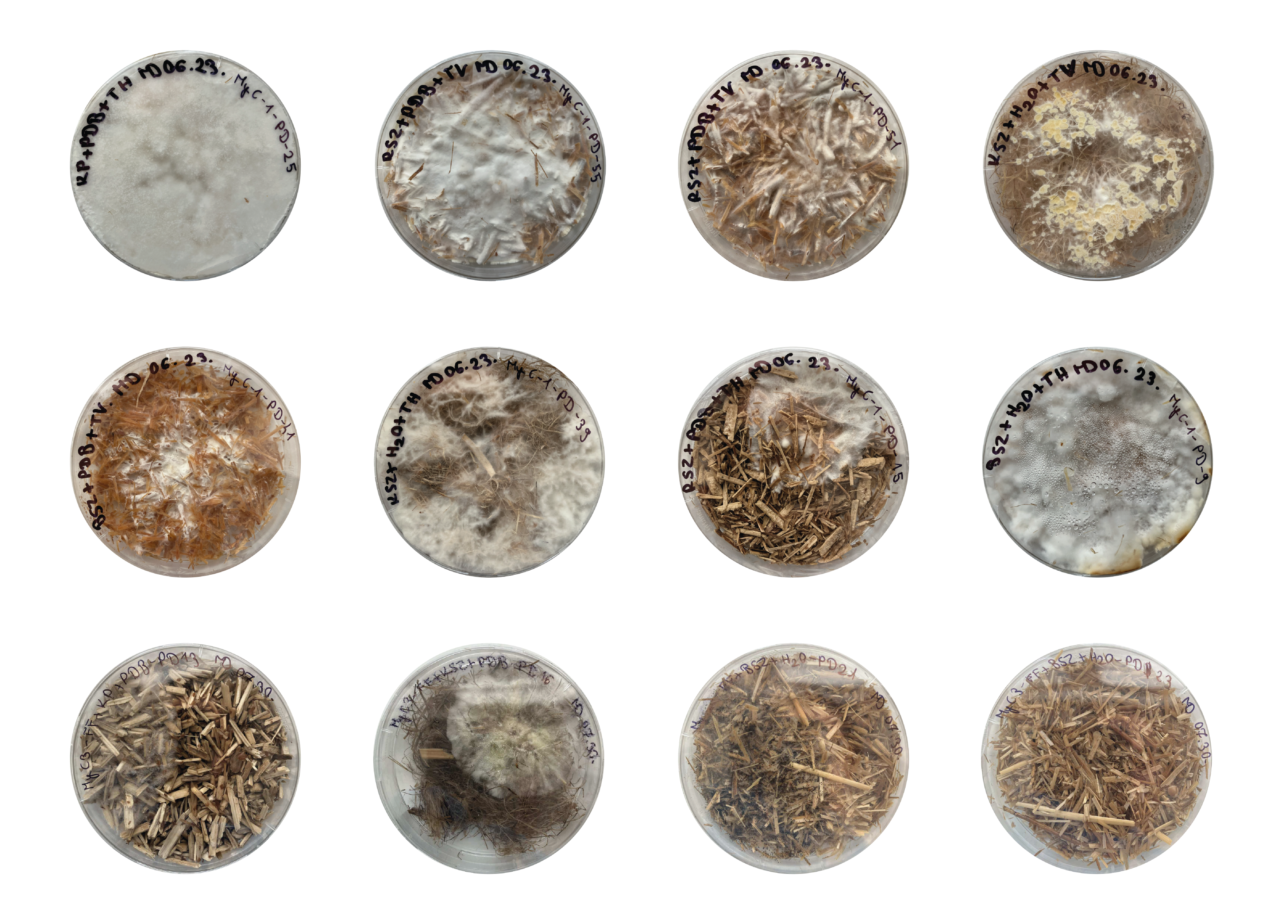
One promising area of this research is the development of mycelium-based packaging materials, which is being implemented within the framework of a parallel small grant research project funded by the German Federal Environmental Foundation (DBU). The cooperation between the two projects creates a special synergy: while DBU funding provides the scientific basis for research and material development, the CircSyst project offers an opportunity to test and demonstrate the new materials in practice, in a real packaging environment.
Industrial and scientific partners are working together in the research. UgrinPack-Erdősi Kft. and Márföldi Dóra, a researcher at Szimbio Lab, are involved in the development. The cooperating partners are jointly working on the creation of mycelium-based composite materials that may meet the packaging requirements of the future, as well as the European Packaging and Packaging Waste Regulation (PPWR).
Mycelium is the underground, thread-like structure of fungi, which, under suitable conditions, is capable of effectively colonising various agricultural by-products with a high cellulose content, thereby creating a natural composite material. Such materials are bio-based, compostable, and may potentially be suitable for producing various packaging elements.
In the first phase of the research, experts examined different combinations of fungal strains and agricultural waste materials. The aim was to identify the combinations that result in the fastest mycelium growth and the strongest structure. During the tests, several white-rot fungal strains were combined with different cellulose-based waste materials, such as hemp fibre, hemp shives, rapeseed straw and wheat straw.
The examination of growth conditions was also supplemented by chemical analysis and particle size testing, as the composition and particle size of the by-products used as filler materials, or substrates, have a significant impact on mycelium growth and the mechanical properties of the resulting material. During the laboratory experiments, more than thirty different fungus–substrate combinations were tested under controlled conditions.
Based on the initial results, combinations were successfully identified that produced particularly rapid growth and a stable mycelium network. In the next phase of the research, these variations will undergo specialised material testing to determine the extent to which the resulting composites are suitable for use as packaging materials.
In the long term, the development of mycelium-based packaging materials may contribute to replacing plastic packaging and offer new bio-based solutions for the food industry and other sectors. The research carried out within the CircSyst project represents an important step towards assessing the practical applicability of these innovative materials.