Highlights from CircSyst’s 3rd Replication Workshop and Study Visit on Water Management


 Link Copied!
Article written by Carla Buonamisis, EURADA
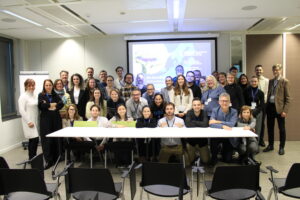
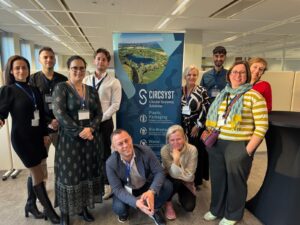
On 19 November 2026, CircSyst held its 3rd replication workshop and study visit in Bruges, Belgium, hosted by VITO and co-organised by EURADA. Focused on the water management value chain, this event marked the final instalment of a series of replication-focused workshops designed to promote peer learning, share practical experiences, and identify the key enablers and challenges for scaling CircSyst’s nine holistic circular models.
With the project’s demonstrators now at a more advanced stage of development, the event brought together more than 50 participants, including consortium partners, external stakeholders and members of the Community of Practice (CoP), to explore the transferability of the four water-related solutions developed in Spain, Slovenia, Belgium and Sweden. The presentations covered different approaches to water reuse, wastewater treatment, and smart water management, considering how they could be adapted to different regional contexts.
The workshop opened with Joaquín Vilaplana (AIJU), who introduced the CircSyst project and outlined the objectives of the session. This was followed by presentations from the four water demonstrators, who provided updates on their pilot activities and the progress achieved so far.
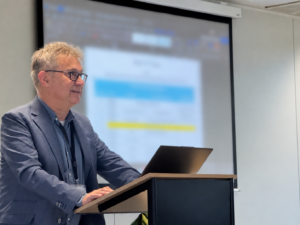
Ángel Marcos Vicente (AIDIMME) presented Demonstrator 1 (Valencian Community, Spain), showcasing progress on a modular tertiary treatment plant designed to turn a single wastewater stream into four different water qualities, adapted to specific industrial uses through on-demand management.
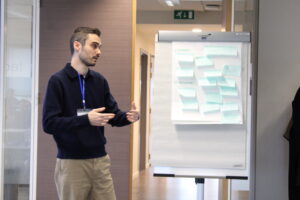
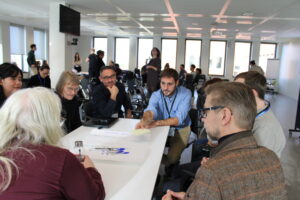
Katja Kuzmič (RRA Podravje) shared advances from Demonstrator 2 (Slovenia), where field trials are assessing the suitability of different reclaimed water qualities for crop irrigation, with particular attention to water quality and emerging contaminants, including pharmaceuticals, pesticides and PFAS.
Marc Spiller (VITO) highlighted the progress of Demonstrator 3 (Flanders, Belgium), combining pilot wetlands for water recovery with smart water-buffering solutions to improve water availability and mitigate the effects of combined sewer overflows. Finally, Andrew Simons (RISE) presented Demonstrator 4 (Visby, Sweden), focusing on the development of water symbiosis between different users and the challenges of safely storing and distributing water of varying qualities.
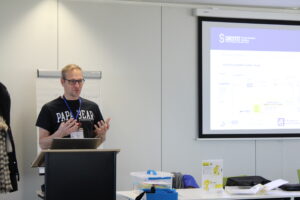
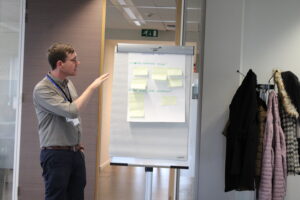
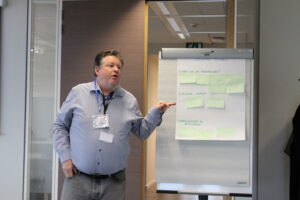
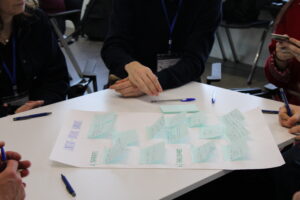
The workshop also featured a contribution from the Community of Practice, represented by Irina Celades, Technical Director of the Instituto de Tecnología Cerámica (ITC) in Castellón, Spain. Drawing on ITC’s experience in advancing water circularity in the ceramic industry across Mediterranean regions, her presentation brought an industrial perspective to the challenges addressed by CircSyst. She highlighted the potential for increasing the use of reclaimed water in industrial processes and stressed that water reuse alone is not enough. Diversifying water sources, developing solutions that are both technically feasible and economically viable, and strengthening collaboration between industry, technology providers, water utilities and regional authorities are all essential to making industrial water circularity a reality.
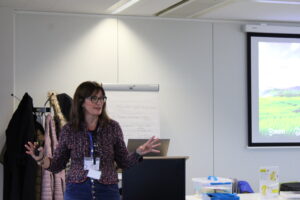
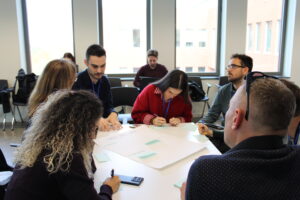
Following the presentations, participants engaged in an interactive peer-exchange session, working in groups to discuss the replication potential of the four water demonstrators. The discussion focused on the transferability of the solutions across different regional contexts, considering the adaptations they might require, as well as the barriers and opportunities that could influence their implementation.
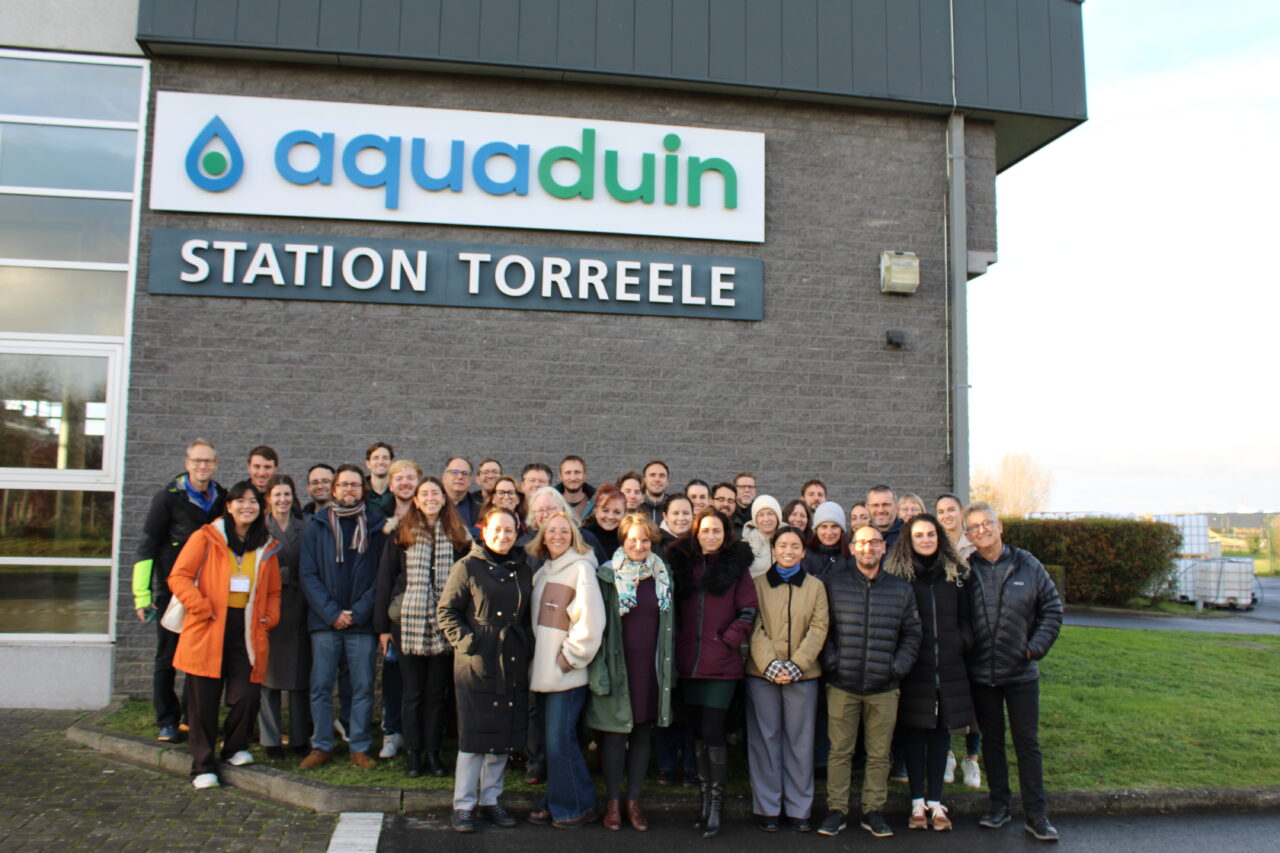
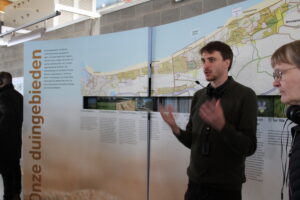
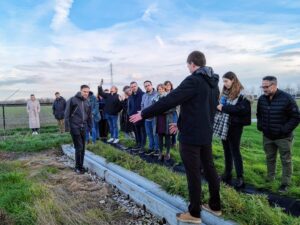
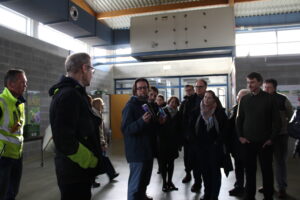
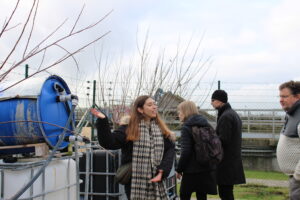
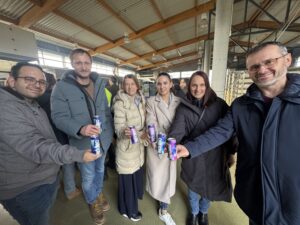
As part of the programme, participants also took part in a study visit to Aquaduin’s facilities in Koksijde, where they explored the water treatment and filtration processes supporting the Belgian demonstrator (Demo 3). The visit provided an opportunity to see the infrastructure and technologies in practice, connecting the discussions around smart water management with their real-world application.
The workshop took place alongside CircSyst’s 5th General Assembly (GeA) on 18 November, bringing consortium partners together to review progress across the project and discuss upcoming activities. Work Package and Demonstrator leaders shared updates on their respective pilots and the results achieved so far. As CircSyst enters its final semester, the focus is increasingly on consolidating these results, strengthening synergies among partners and moving towards market-ready solutions.