
Driving Collaboration for Circularity: The CircSyst Project at the CCRI Stakeholder Event


 Link Copied!
Article written by Miriam Clement Talavera, Junior Policy and Project Officer at EURADA
On 20 November 2025, CircSyst, represented by consortium partner EURADA, had the pleasure to attend the CCRI Stakeholder Event at Nivelles, Belgium. The event brought together representatives from the European Commission, regional and local authorities, development agencies and international networks to discuss how European territories can effectively advance the transition towards a Circular Economy.
As a project part of the European Commission’s Circular Cities and Regions Initiative (CCRI) dedicated to advancing the adoption of circular systemic solutions across Europe, CircSyst had the opportunity to contribute to the debate held during the CCRI Stakeholder Event, participate in several thematic workshops, and discuss synergies and potential collaboration pathways with the CCRI Knowledge Hub.
The discussions held during the event highlighted how projects operating across European regions help translate European policy ambitions into concrete, place-based solutions, reflecting on how initiatives such as CircSyst contribute to strengthening systemic thinking and collaborative capacity within European regions. Indeed, as part of the CCRI community, CircSyst supports territories in approaching circularity as an integrated and coordinated transition, requiring alignment between policies, stakeholders and investment priorities.
Moreover, a recurring theme throughout the session was the central role of public authorities in shaping the conditions for Europe’s circular transition. Speakers emphasised that cities and regions act as market shapers, while also helping to de-risk innovation and connect businesses with research partners and financial instruments, and thereby should be taken into account when shaping the approach to the circular transition.
As a CCRI project actively encouraging exchange between regions, CircSyst’s participation in the stakeholder event further highlighted the crucial role of cities and regions in the circular transition by illustrating the value of cross-territorial cooperation, continuity and mutual learning.
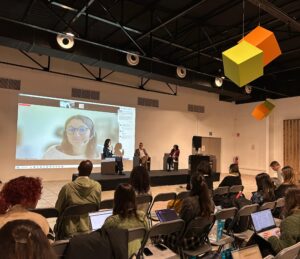
Speakers also highlighted that, while regions increasingly share strong commitments and ideas, there remains a need for practical, implementation-oriented approaches. In this regard, both the CCRI Knowledge Hub and CircSyst play an important role in enabling mentoring, replication of good practices and concrete implementation support for regions.
Looking ahead, the message for regions interested in joining or strengthening their engagement in the CCRI was clear: start early, build on existing strengths, engage local communities and work through long-term cooperation frameworks. Towards 2030, cross-regional collaboration is expected to become standard practice, supported by strategies that extend beyond individual project cycles.