
Citizens, supermarkets and innovation joining forces for circular plastics


 Link Copied!
Regional Co-Creation and Policy Workshop Successfully Held in Thessaloniki
On 10 March 2026, the Regional Co-Creation and Policy Workshop was successfully held in Thessaloniki, Greece.
The event took place at the Central Amphitheater of CERTH and was organised by the Additive Manufacturing Unit (AMU), ITI/CERTH
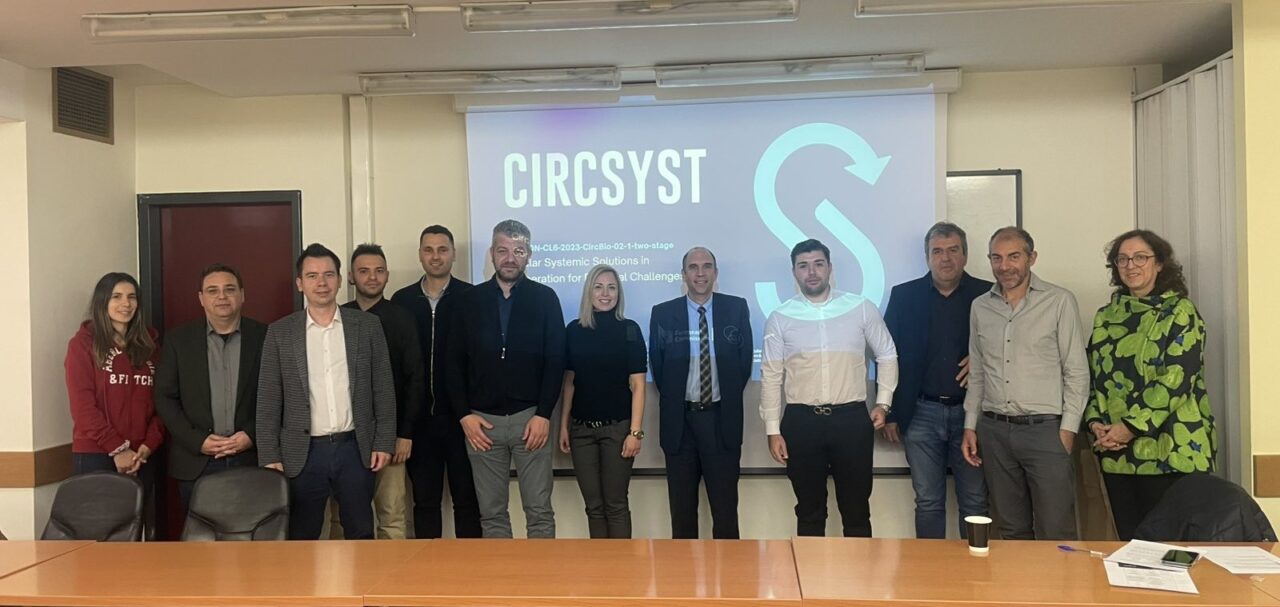
The workshop brought together key regional stakeholders relevant to the project, including representatives from CERTH, Masoutis SA, Prepac SA and Macpac SA, the Hellenic Recovery Recycling Corporation (HERRCO), Aristotle University of Thessaloniki (AUTH), and the International Hellenic University (IHU). Participants engaged in a valuable and forward-looking exchange on how to further advance the project’s objectives.
During the discussions, several new ideas and strategic directions were highlighted. Particular attention was given to opportunities for strengthening technological circular solutions, promoting social awareness and citizen engagement, identifying regulatory challenges and opportunities, and developing effective financial incentives for both businesses and citizens.
The workshop themes were also closely linked to the activities of Demonstrator 8 in Greece, which focuses on developing a system to engage citizens in the segregation of plastic waste according to material composition. At the heart of this demonstration is MASOUTIS, the largest food retail company in Greece, which already diverts 91% of the waste generated by its Logistics Center away from landfills and towards further utilisation.
Within CircSyst, MASOUTIS operates pilot living labs in 36 supermarkets, where customers can dispose of their plastic waste at dedicated collection points by manually sorting it into PET, PP, and LDPE fractions. The pilot aims not only to improve separate collection practices, but also to demonstrate how properly sorted plastic waste can become a valuable resource again.
The collected LDPE, PET, mPET, and PP materials will be reprocessed through a dedicated recycling line into filament for 3D printing. The properties of the resulting materials and the printed elements will be tested and validated, after which they will be further recirculated in several circular applications.
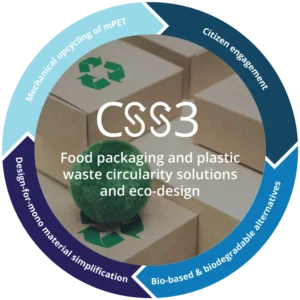
On the one hand, the recycled materials will be reintegrated into the consumer–supermarket relationship: MASOUTIS will introduce incentive mechanisms to encourage citizens to take an active part in co-creative circular economy processes. Through its Mas Card loyalty programme and a newly developed mobile app, users will be able to track their contribution, redeem vouchers, and even participate in the creation of 3D-printed products made from recycled materials.
On the other hand, the demonstration will also include new trolleys and baskets made from recycled PP and LDPE, showcasing in a tangible way how food packaging waste can be transformed into second-life products. In addition, part of the post-consumer mPET fraction will be transferred to another project demonstrator for further mechanical recycling.
The pilot is supported by the MASOUTIS Logistics Center, which serves the company’s 379 stores and 339 supermarkets, and includes its own biological wastewater treatment system and packaging recycling centre. CERTH is responsible for supporting the recycling processes, contributing to the development of 3D polymer filament from the plastic pellets produced, and facilitating the development of 3D-printed parts in cooperation with supermarket customers.
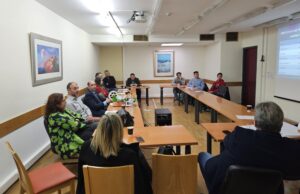
During the workshop, participants assessed the proposed ideas in line with already developed plastic packaging policy directions, evaluating them based on their expected impact and feasibility. New policy and strategic approaches were also discussed, with a particular focus on strengthening technological innovation, increasing social acceptance, and designing attractive and competitive financial incentives for both companies and citizens.
Overall, the workshop generated valuable feedback and constructive dialogue that will help shape the further implementation and dissemination activities of the CircSyst project. Both the workshop and the Demonstrator 8 pilot clearly show that the transition to a circular economy requires technological innovation, strong business engagement, well-designed incentive systems, and the active involvement of citizens.
More information about the team’s work on circular approaches to the sustainable valorisation of plastic waste from food packaging through social inclusion.