CircSyst joins European conversations shaping the future of circularity


 Link Copied!
Article written by Carla Buonamisis, EURADA
CircSyst continues to engage with key actors across Europe’s circular economy landscape through high-level events in Brussels, where policymakers, industry representatives and researchers exchange views on how to achieve more sustainable and resilient economic models.
In April 2026, CircSyst, represented by EURADA, took part in the European Circular Economy Stakeholder Platform (ECESP) Annual Conference, held under the theme “A competitive and fair circular Europe: The ambition at the heart of the single market”.
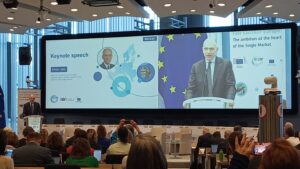
The discussions positioned circularity as a key driver of Europe’s competitiveness, resilience and resource security, extending its relevance beyond environmental objectives. A central focus was the need for a more coordinated European framework to accelerate the transition, including the upcoming Circular Economy Act, aimed at strengthening markets for secondary raw materials and supporting more integrated circular systems. The conference highlighted the importance of aligning policy, industry and regional actors to translate circular ambitions into practical implementation.
Following discussions around enabling conditions for circularity, CircSyst also participated in the Hubs4Circularity Community of Practice Final Conference on 27 May, focusing on the challenge of moving from innovative solutions to real-world implementation. The debate highlighted the role of industrial and regional hubs in testing and scaling circular approaches, showing that successful transformation requires not only technological innovation, but also cooperation between public and private actors, as well as stable regulatory conditions and long-term coordination.
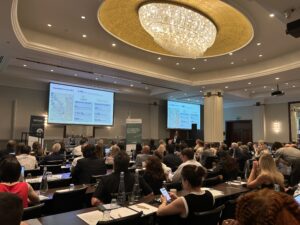
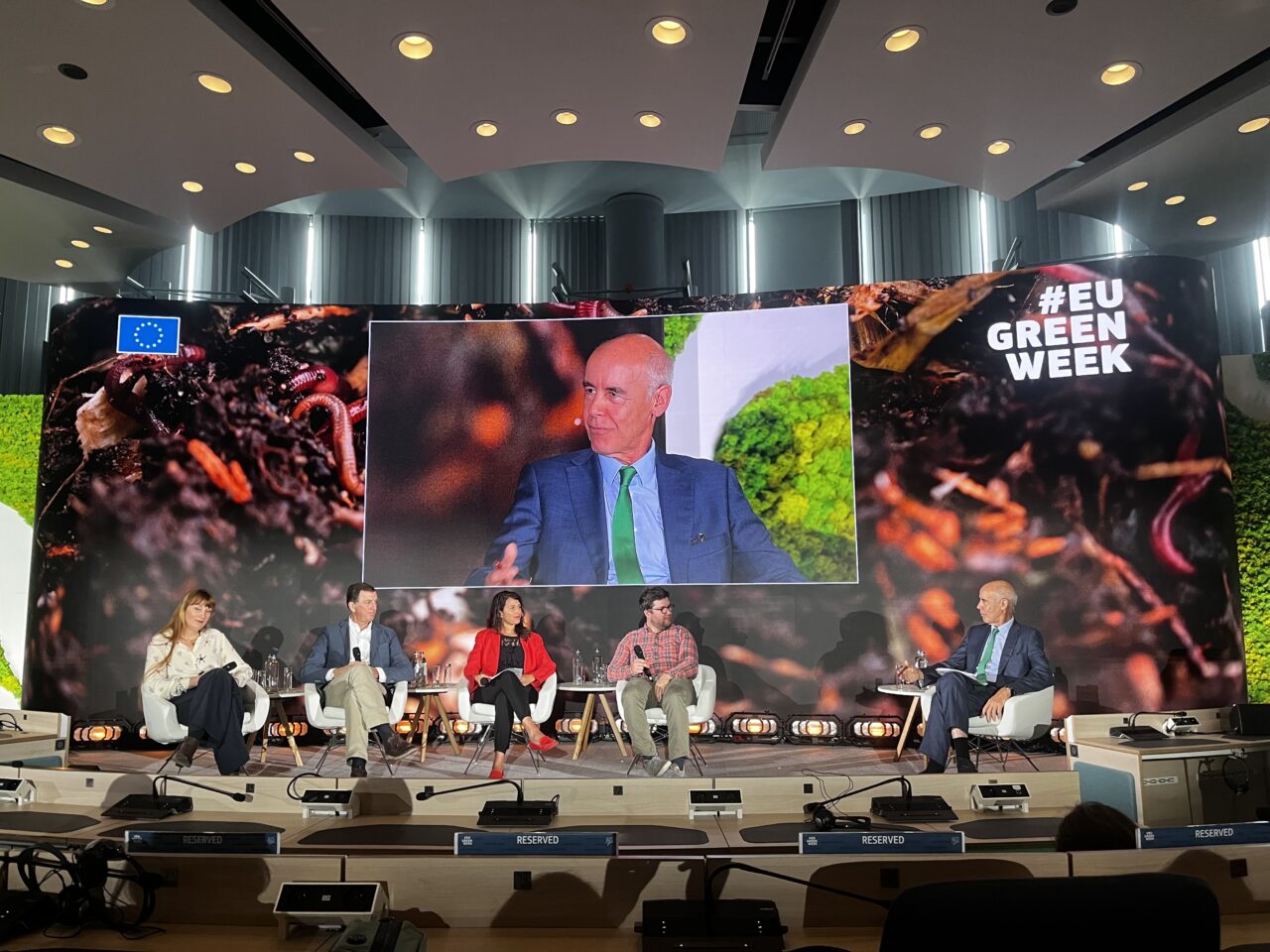
In June, CircSyst joined the EU Green Week 2026, a European Commission event exploring the link between nature, biodiversity and economic resilience. Opening the conference, Jessika Roswall, European Commissioner for Environment, Water Resilience and a Competitive Circular Economy, highlighted that protecting nature is not only an environmental priority but also a foundation for long-term competitiveness. She called for a deeper integration of natural capital into economic and financial decision-making, including through improved valuation and emerging tools such as nature credits.
Across the discussions, a clear message emerged: economic systems are deeply dependent on healthy ecosystems, and the transition towards a nature-positive economy requires closer alignment between finance, business and territorial development. Financial actors pointed the importance of reliable impact measurement, stronger data and investment frameworks that support ecosystem restoration, while private sector examples illustrated how environmental strategies are increasingly integrated into business models, driving both innovation and competitiveness. At territorial scale, debates on soil health, rural development and nature-based solutions underlined the importance of supporting local actors and creating the right conditions for resilient food systems and communities.
Overall, the three events reinforced a systemic understanding of the role of nature in Europe’s future: not as a separate environmental agenda, but as an integral part of economic transformation, a perspective closely aligned with CircSyst’s mission to promote Circular Systemic Solutions across Europe.